
 ▶
 ▶
- Home
- Solutions
- Landfill leachate
Rotreat · RCDT 3.0 reverse osmosis
Landfill leachate treatment with RCDT reverse osmosis
Membranes separate COD, ammonium, salts and PFAS physically and keep them in the concentrate; the permeate reaches documented discharge values. Every plant is planned on your feed analysis and a pilot run on site, not on a promise.
- AbwV Annex 51 · COD, ammonium
- PFAS · drinking water limits 2026/2028
- RCDT 3.0 · Radial Channel Disc Tube
- ISO 9001:2015
Relevance and trigger
For landfill operators, waste companies and their planning engineers
Environmental departments of landfill operators, municipal and private waste companies, and the engineering offices that prepare the plant decision and carry it in front of the authority.
Particularly relevant if one of these points applies
- Discharge values under AbwV Annex 51 or the local permit are not met reliably, or a stricter permit is coming.
- The feed changes with the season: volume, COD, ammonium and conductivity swing over the year.
- Disposal or transport of the leachate is getting more expensive every year.
- Difficult constituents: COD, ammonium, high conductivity, PFAS.
- A plant decision is pending, and the numbers behind it have to hold up in front of the authority.
Not the right page if a guaranteed discharge value or a flat recovery figure is expected without an analysis and a pilot run. Leachate differs from site to site; the values here are documented for their sites.
The process
From raw water to permeate in 33 seconds
Feed and conditioning, filtration, high pressure, the two RCDT stages, concentrate and post-treatment: one plant, one container, seven stages. The film starts by itself when it comes into view.
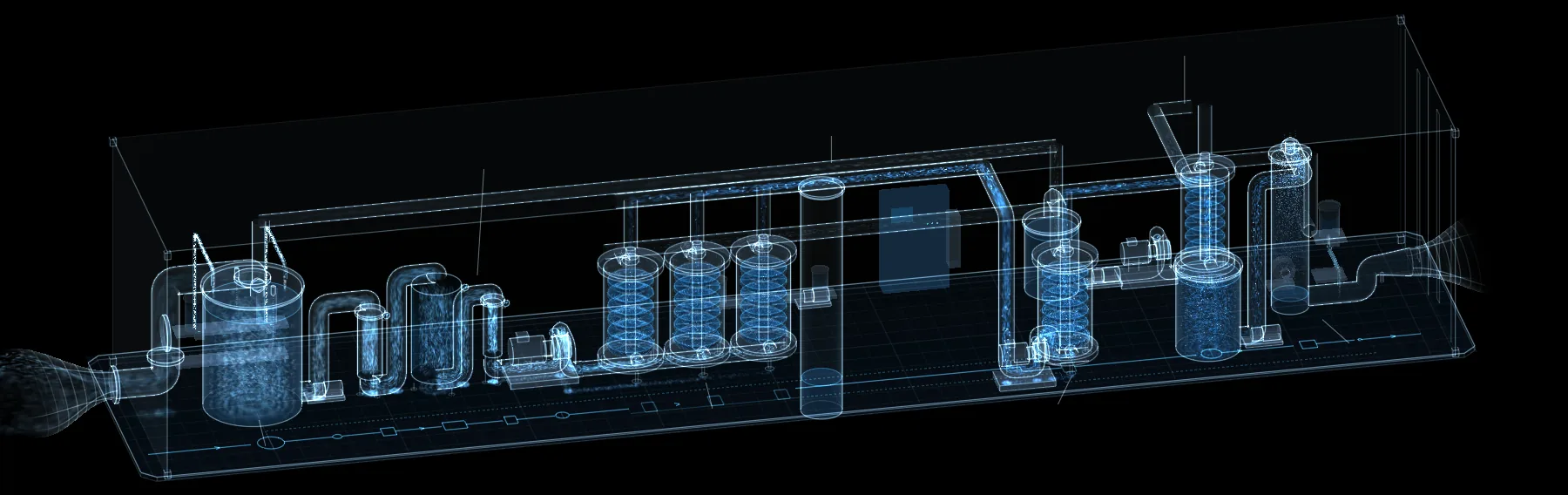
Drawn from the Rotreat flow sheet of a two-stage RCDT plant with the optional high-pressure concentrate stage. Figures shown are documented manufacturer values.
Why RCDT for leachate
Open channels, high cross-flow, membranes that can be swapped
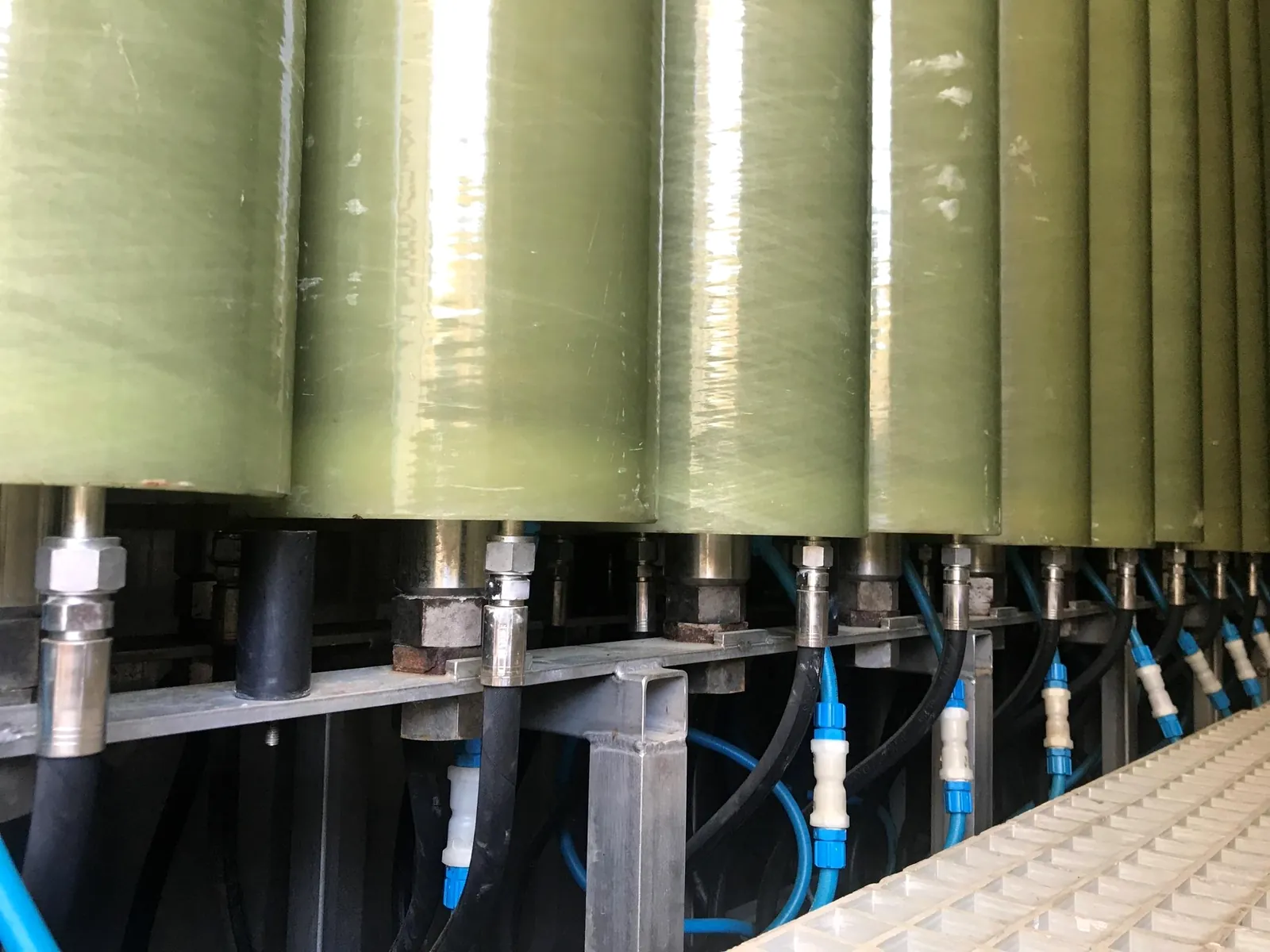
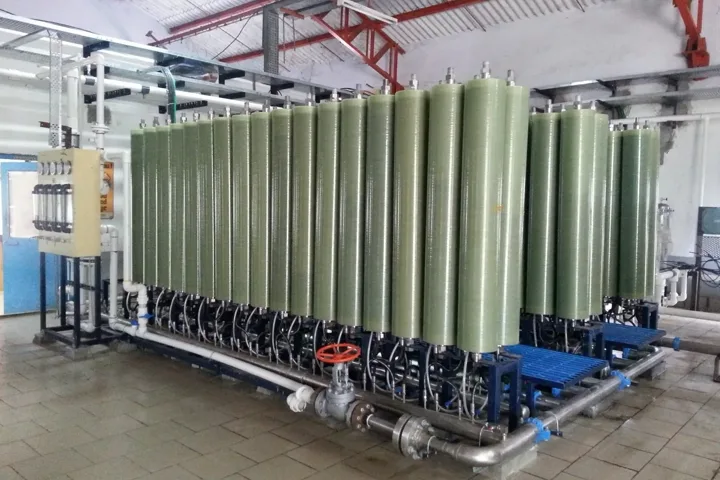
Leachate carries solids, organics and salts that clog conventional spiral-wound elements. The RCDT module guides the water in open radial channels across membrane cushions at high cross-flow velocity. Deposits are carried away instead of building up, so the module keeps its performance with a feed that changes from month to month.
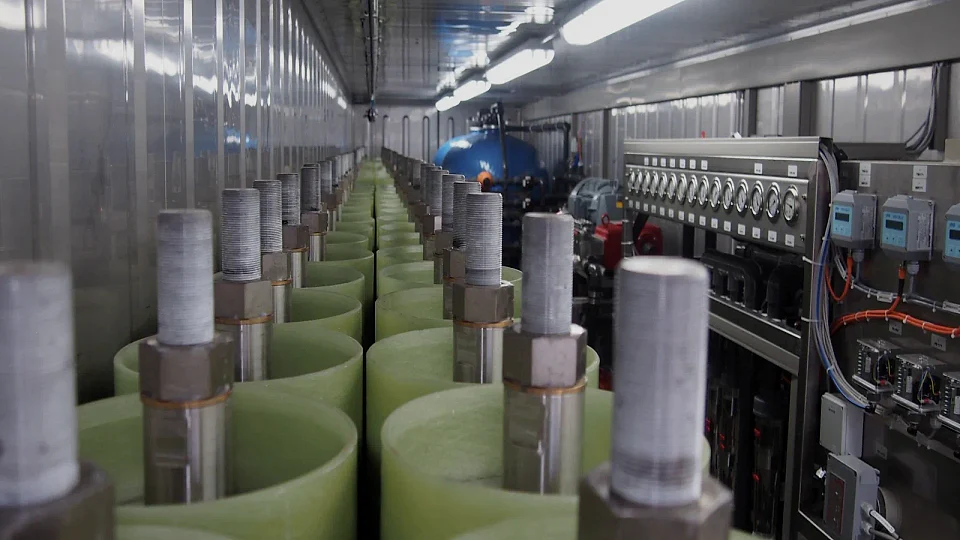
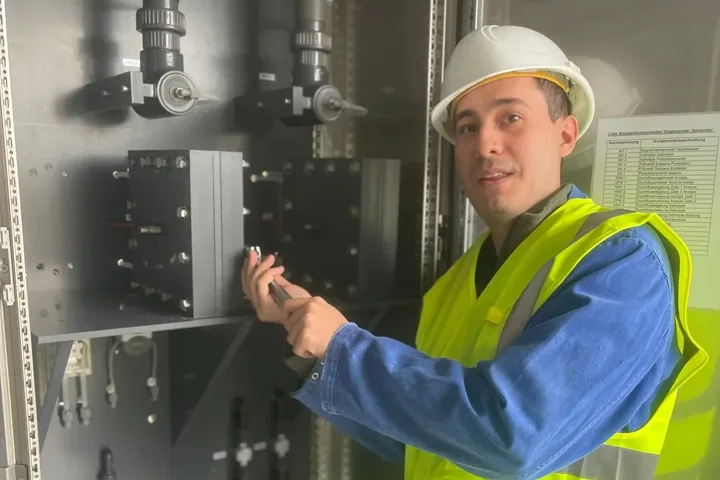
Each RCDT 3.0 XXL module carries up to 13 m² of membrane area, the largest disc-tube module available. With the Easy Click system a module is exchanged on site without special tools.
Operation at up to 90 bar handles high salt loads. An optional concentrate stage at up to 160 bar reduces the volume that has to be disposed of.
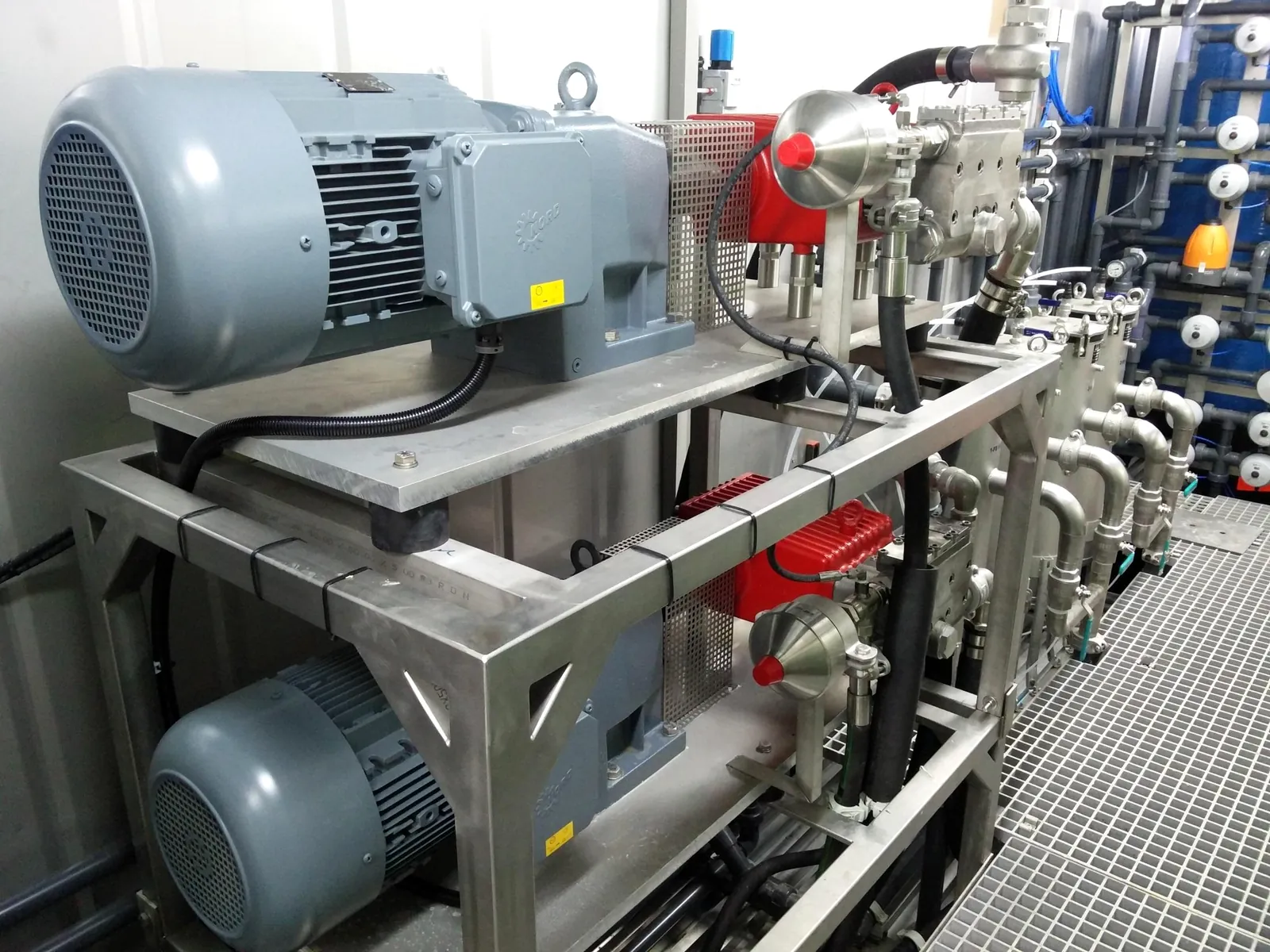
Built for continuous operation on a landfill
- Bag, sand and cartridge filtration in front of the membranes; antiscalant and acid dosing integrated in the feed tank.
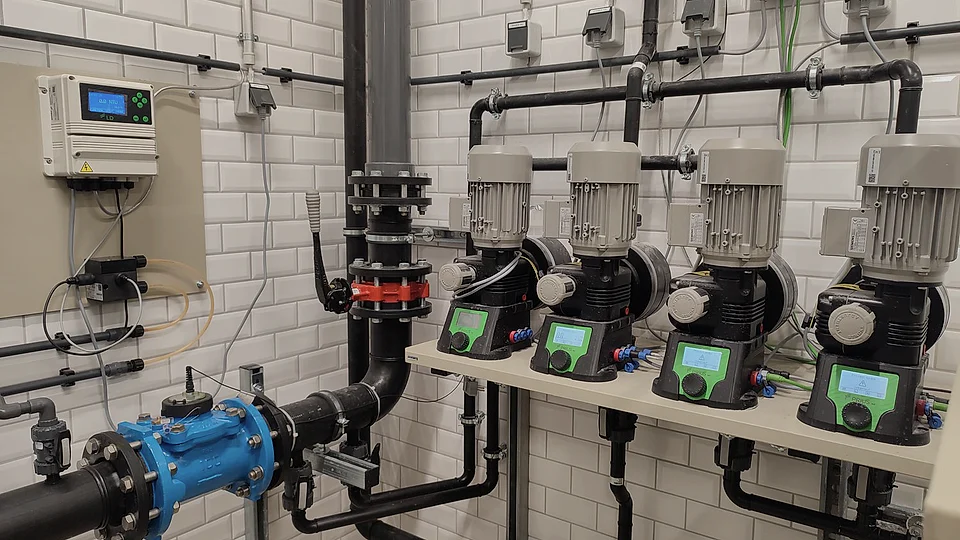
- Piston diaphragm high-pressure pumps with direct drive and stainless steel heads.
- Stainless steel and corrosion-free plastics where the water is aggressive; degasser with plastic blower and caustic dosing for a neutral permeate.
- SCADA control with panel PC and remote access; CIP cleaning integrated.
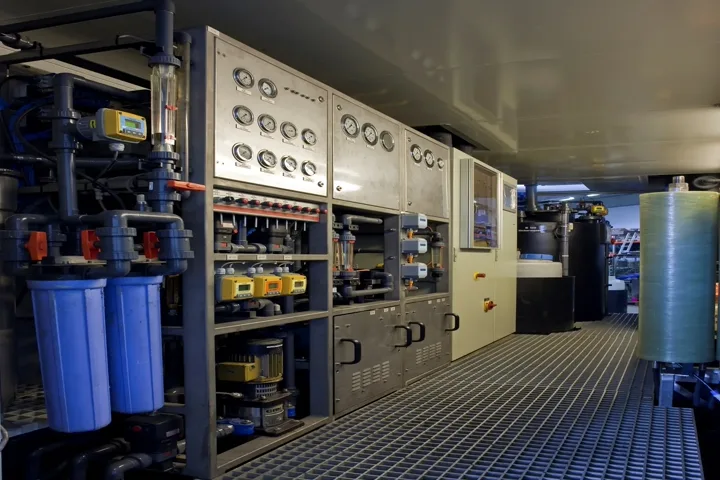
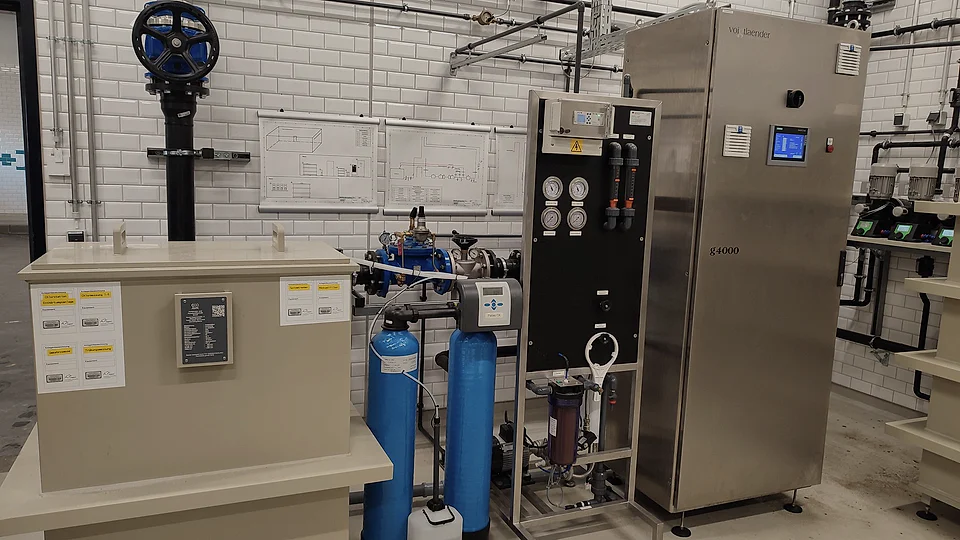
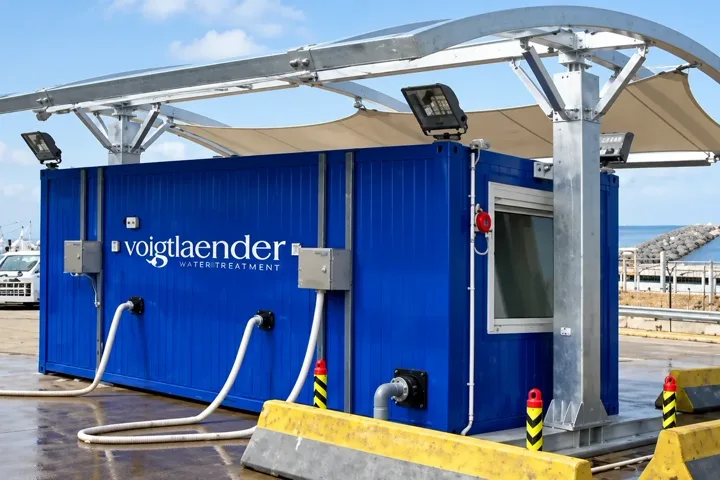
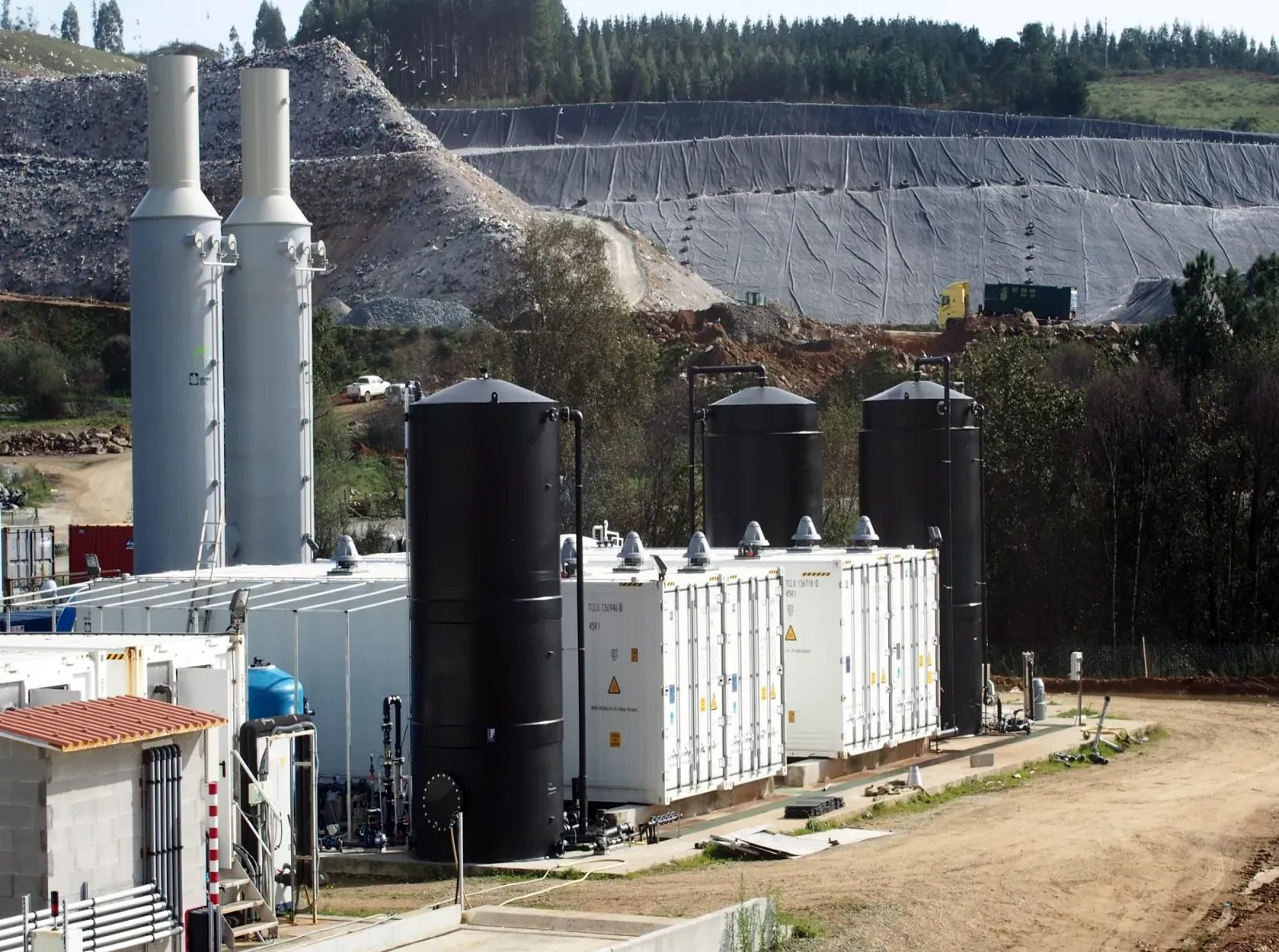
- Installed in a container on site or in a building; standard modular plants from 0.5 to 15 m³ per hour.
Rotreat · membrane exchange
Easy Click: the membrane stack exchanged on site
The module exchange, animated: 35 seconds, on site, without special tools.

Drawn from the Rotreat flow sheet of a two-stage RCDT plant with the optional high-pressure concentrate stage. Figures shown are documented manufacturer values.
Documented values
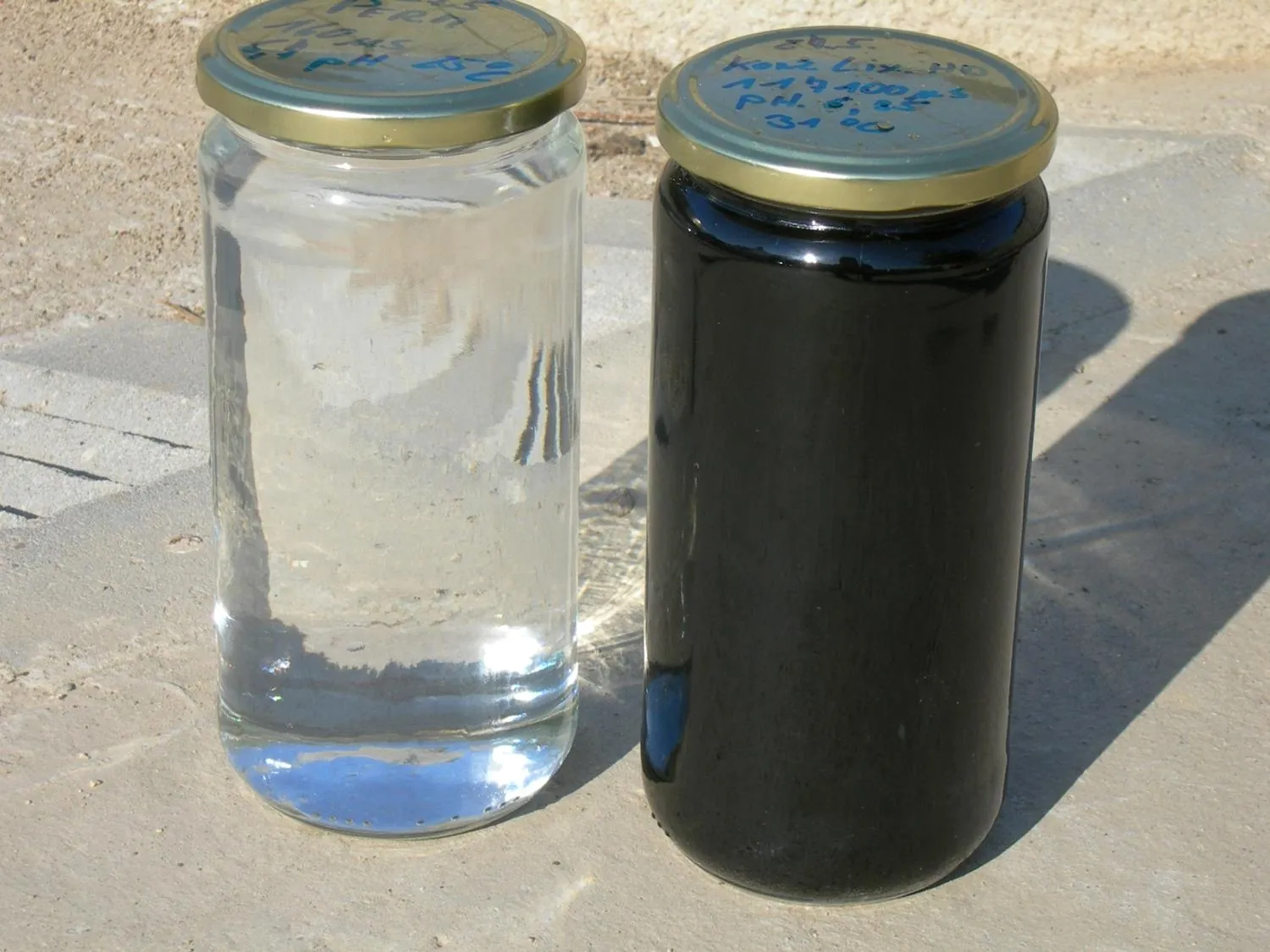
What the permeate looks like after the RCDT stages
One documented sample pair from a landfill leachate plant (Rotreat brochure 2024). The values are for that site; the pilot run shows what your leachate reaches.
Bars on a logarithmic scale. Values as documented for the site; the achievable value for another leachate is shown by the pilot run.
Expected removal rates of the RCDT 3.0 XXL module
Manufacturer expectation, single against double RO stage. The second stage is what turns a good permeate into a discharge-ready one.
| Substance group | Single stage | Double stage |
|---|---|---|
| Monovalent ions | 96–98% | > 99.5% |
| Polyvalent ions | 98–99.5% | > 99.9% |
| Ammonium at pH 6.5 | 95% | > 98.5% |
| High-molecular organic compounds | 99–99.8% | > 99.9% |
Source: Rotreat presentation 2024. Expected values for the module, not a guarantee for a specific water.
PFAS
Reverse osmosis separates PFAS from the water and concentrates them in the concentrate. It does not destroy them. The concentrate path is therefore part of every evaluation, not an afterthought.
Concentrate
The optional high-pressure stage at up to 160 bar concentrates further and reduces the volume for disposal or further treatment. How far depends on the salt load of the feed.
Discharge values
Annex 51 of the German wastewater ordinance sets COD, nitrogen and further parameters for landfill leachate. Whether a permeate meets them is measured in the pilot run, with the parameters of your permit.
Documented plants
Three leachate plants, three different feeds
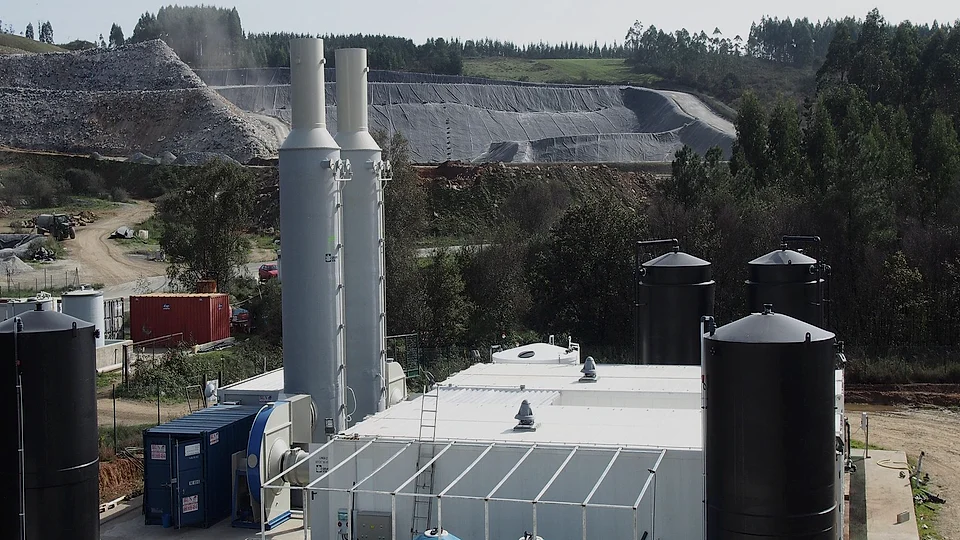
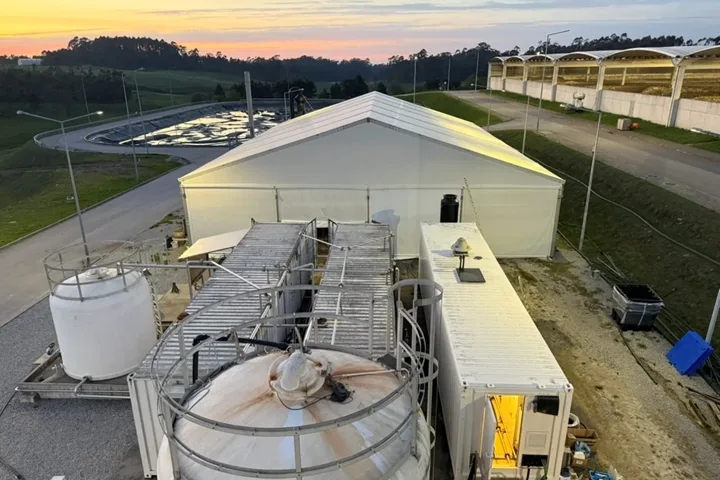
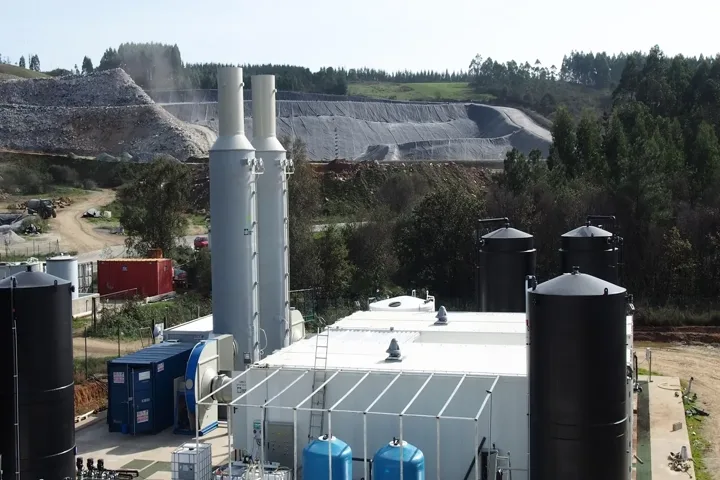
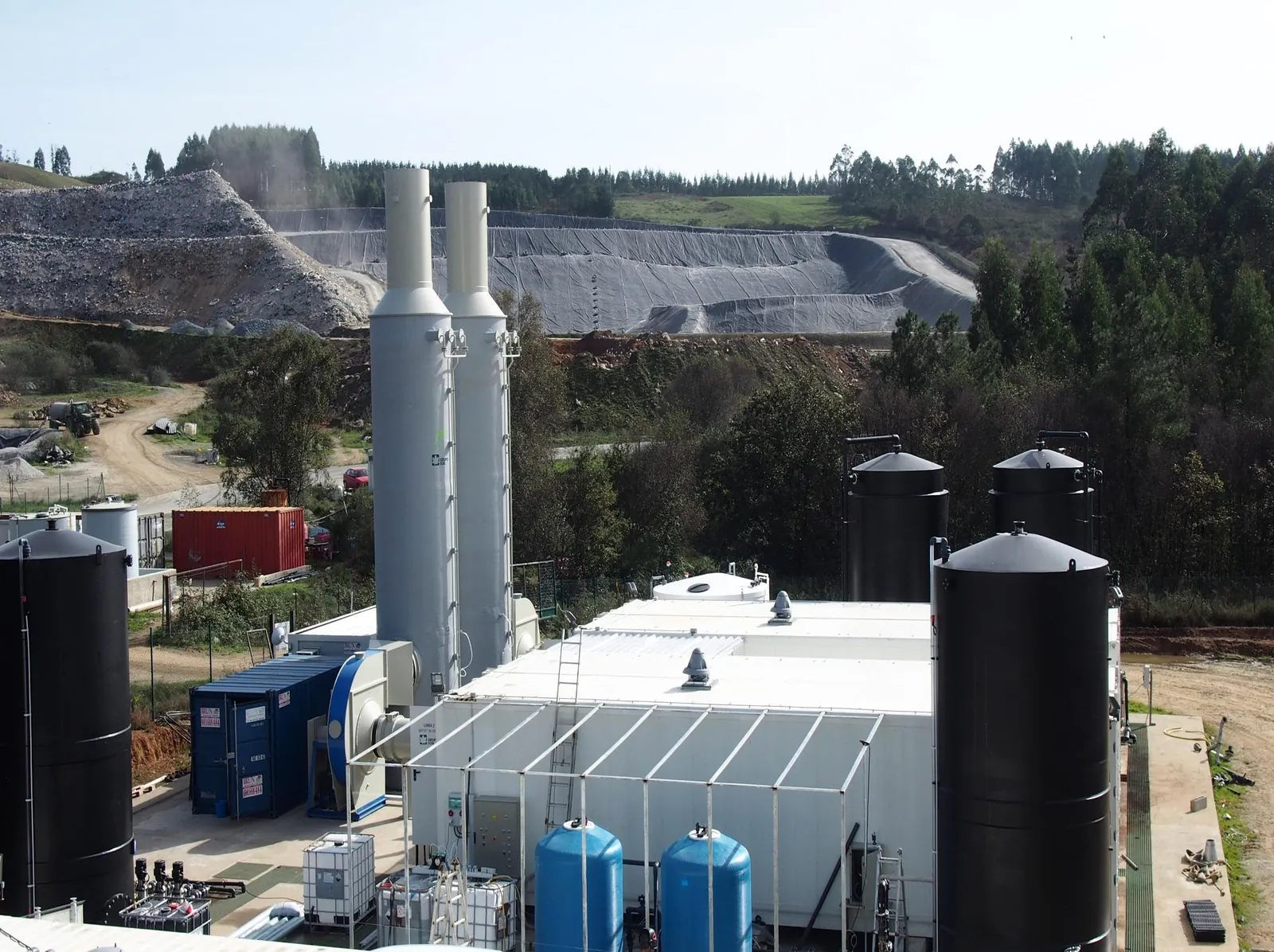 Galicia, Spain 600 m³ per day Three RO stages, 2 × (84 + 27 + 18) RCDT modules. Leachate of a large landfill, in continuous operation.
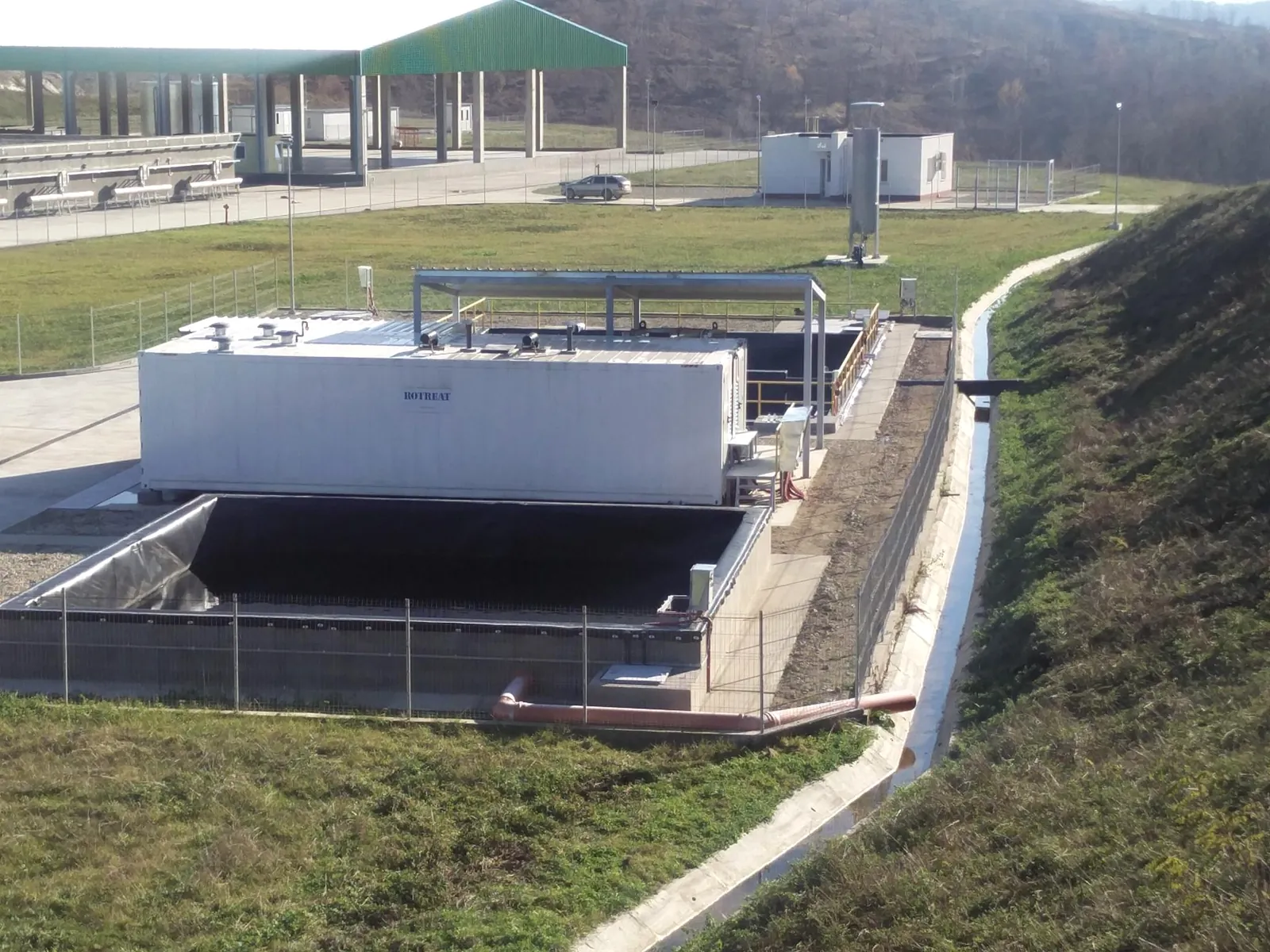 Caras, Romania 170 m³ per day Three RO stages, 60 + 15 RCDT modules and 6 spiral elements. Permanent plant in its own building.
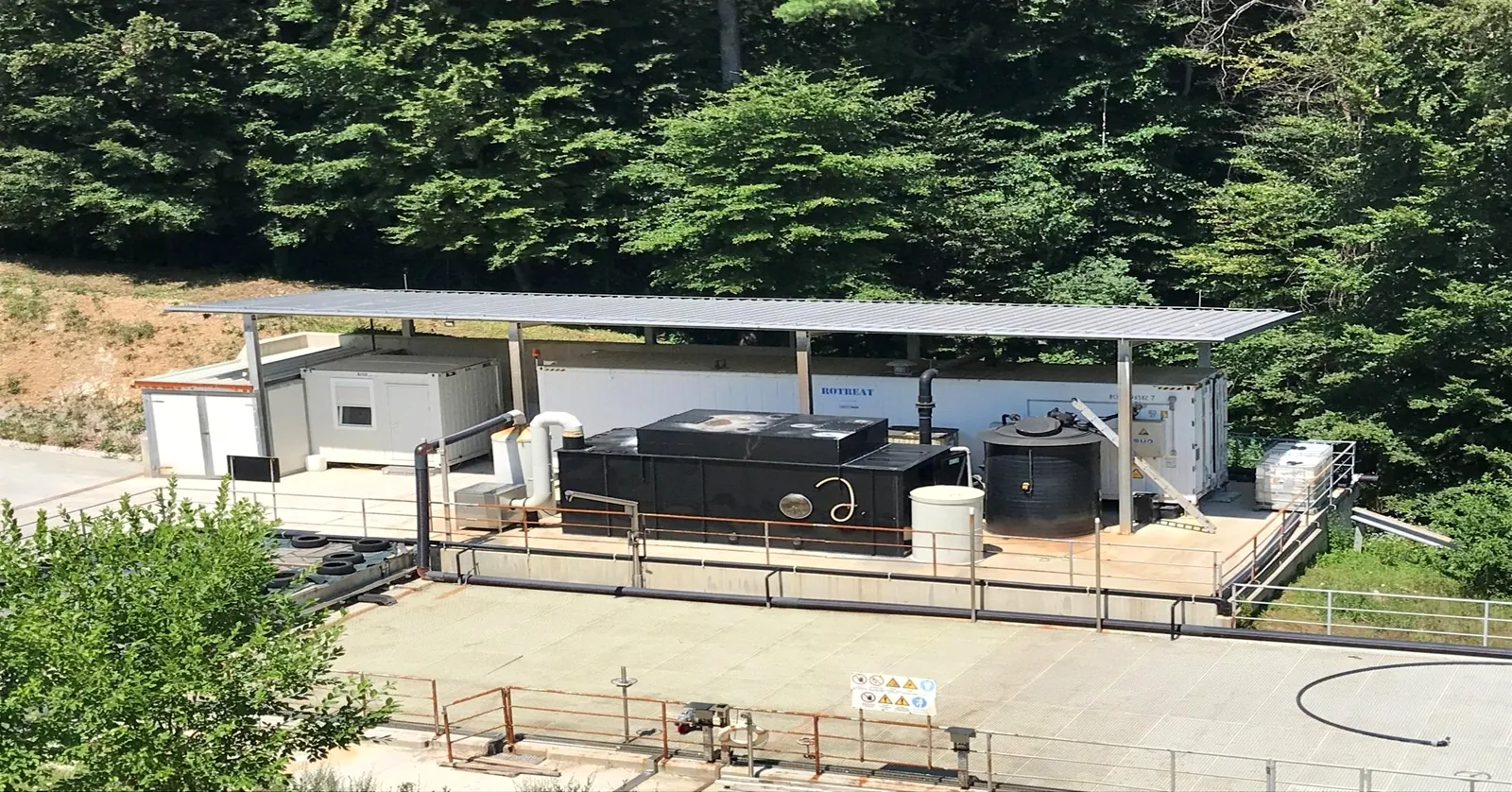 Slovenia 120 m³ per day Containerised plant in corrosion-free construction, RCDT modules in two stages.
Capacity and result are project-specific. Further documented leachate plants: Australia 120, Novo Mesto 120 and Slovakia 80 m³ per day.
How a plant decision is prepared
Four steps before anyone buys a plant
Difficult water needs solid data before it needs a plant. The pilot run replaces assumptions with measured values from your own feed, and those values carry the plant decision in front of the authority.
Delivery options
- Standard modular plants from 0.5 to 15 m³ per hour
- Rental plants up to 150 m³ per day in one 40 ft container
- Installation including start-up in two days, as experienced on site
- 1
Water analysis
Feed matrix, the range of variation over the year, the target values of the permit. Existing analyses are enough to start.
- 2
Pilot run on site
A low-capacity full-scale mobile plant runs on the real feed. Rotreat delivers, installs, operates and hands over a test report. The result shows the achievable permeate quality and recovery for your water.
- 3
Membrane and process selection
Pre-treatment, number of RO stages, the high-pressure concentrate stage, container or building, capacity reserve for wet years.
- 4
Concentrate path and operation
Disposal or further treatment of the concentrate, CIP cleaning, service and membrane exchange. Agreed before the plant is ordered, not after.
Questions before the first call
What operators ask before a pilot run
01Does the permeate meet the values of AbwV Annex 51?
Reverse osmosis is a physical separation: what is dissolved in the water stays in the concentrate to the extent the membrane rejects it. The documented sample pair on this page shows what two RCDT stages reached for one leachate. Whether your permit values are met is measured in the pilot run with your feed and your parameters, and the test report states it.
02What happens with PFAS?
PFAS are separated from the water stream and enriched in the concentrate; the membrane does not destroy them. The concentrate path, disposal or further treatment, is therefore planned together with the plant. The drinking water limits for PFAS from 2026 and 2028 are one reason more operators look at membranes now.
03How much concentrate remains?
That depends on the salt load of the feed. Two RO stages and the optional high-pressure stage at up to 160 bar reduce the volume step by step; recovery rates of up to 90% are reached with suitable water. The pilot run gives the figure for your leachate.
04How does a pilot run work?
A low-capacity full-scale mobile plant is delivered to the site, installed, operated on the real feed and documented in a test report. The plant for the site is then selected from the data generated on site, not from a data sheet.
05Can a plant be rented instead of bought?
Yes. Rental plants with capacities up to 150 m³ per day are installed in one 40 ft container, for peak seasons, remediation periods or as a bridge until the permanent plant is in place.
Pilot run
Send the analysis. We plan the pilot run.
Describe the site, the feed and the requirement. Our specialists classify the request and come back with a proposal for the pilot run and its documentation.
- 1Describe site, feed volume and requirement; attach existing analyses.
- 2Our specialists classify the request and call back with questions.
- 3We agree the pilot run, its scope and the test report.

Request a pilot run
Two minutes. No newsletter, no automated follow-up.
Reply within two working days. Your data stays with Hydreatio GmbH.
Related
RCDT 3.0 technology
The Rotreat process stage by stage: modules, pressures, energy, the plant in the container.
Leachate references
Galicia, Caras and Slovenia with photos, plant data and the measured values.
All references
Every documented Hydreatio case study, filterable by application, industry and location.
Pilot run on your leachateSend the analysis, we plan the trial.
Request a pilot run